


Everything you need to know about the
Paint Australia Beautiful mural competition
WHAT’S IT ABOUT?
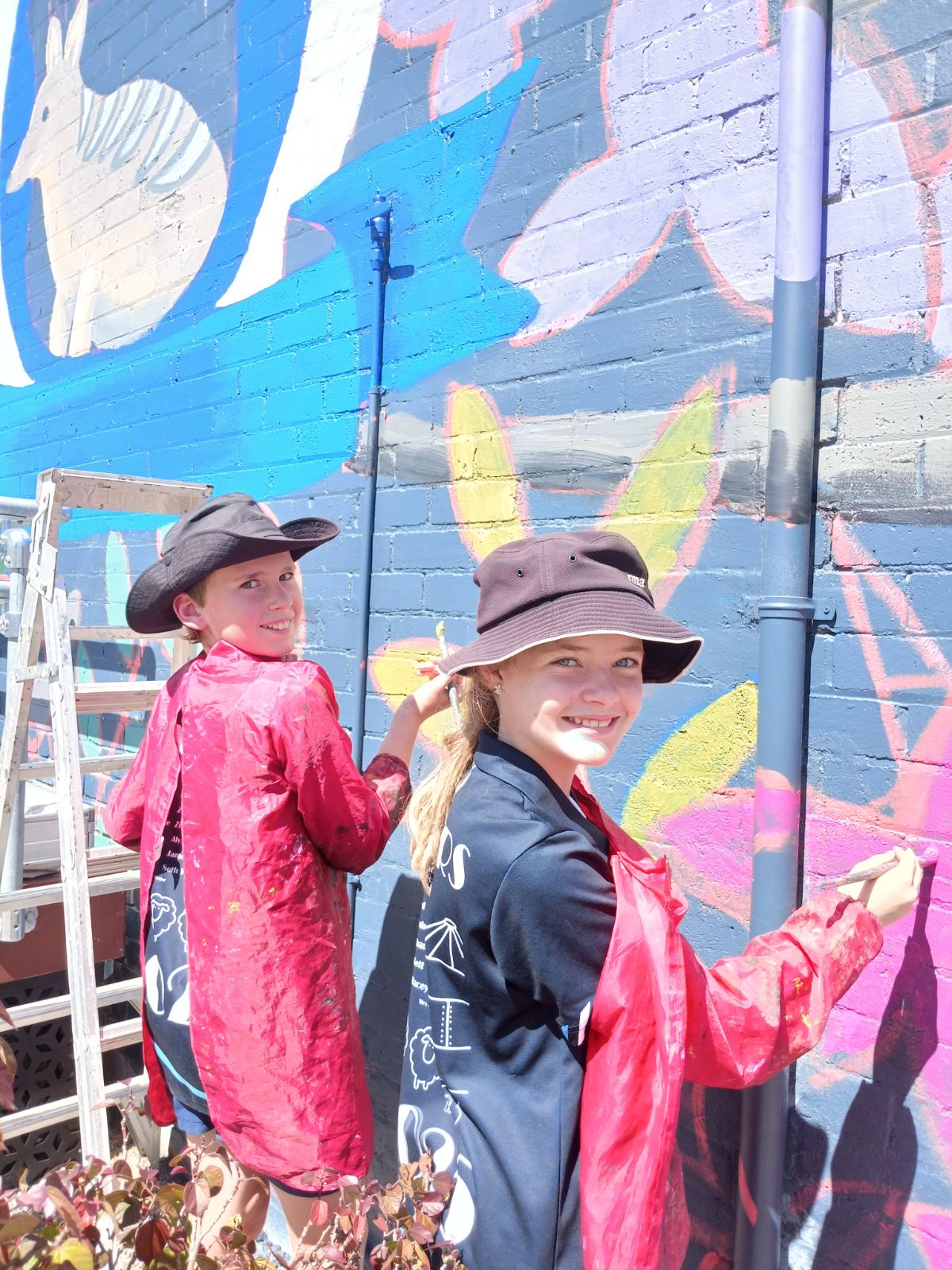
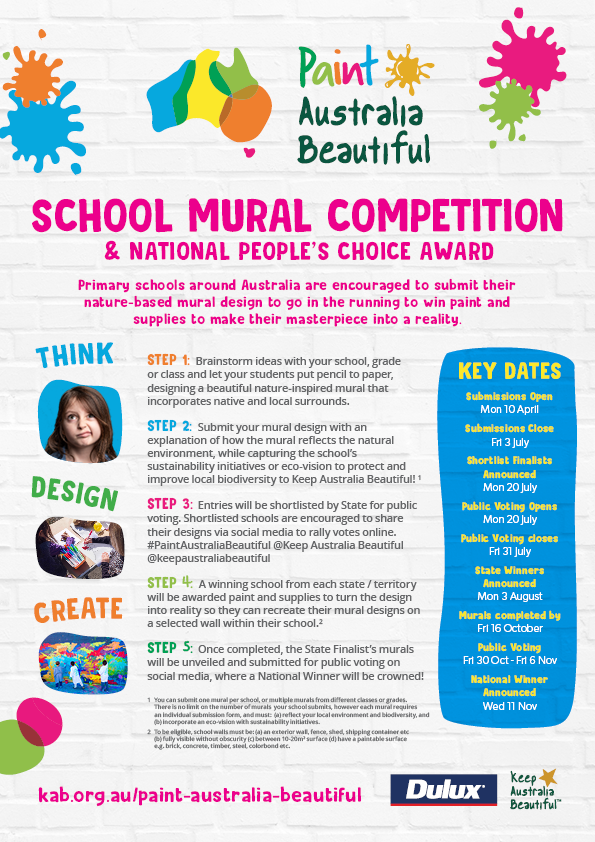
In 2022 KAB launched the inaugural Paint Australia Beautiful – Schools Competition aiming to inspire children to think more deeply about how they can care for the environment. They express their vision for the future through a mural art project. Primary schools around Australia submit a nature-based mural design to go in the running to win all the paint and supplies required to make their mural a reality.
On submission, children explain how their mural reflects the natural environment and their school’s sustainability initiatives. The competition promotes creativity and hopes to educate younger Australians on how we can help conserve our flora and fauna by limiting our environmental impact.
Design submissions are open throughout first term and second and in the third term the murals are shortlisted by a judging panel with fair representation across all States and Territories. The shortlisted schools are then encouraged to share and promote their designs via social media for public voting amongst their school communities and then winners are announced in each state and territory. All winning murals are then completed by third term.
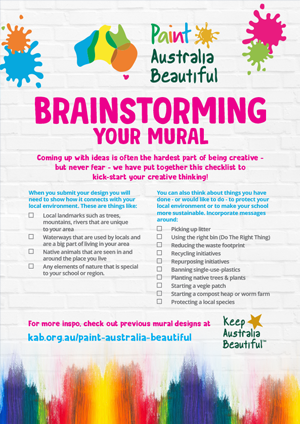
BRAINSTORM YOUR DESIGNS
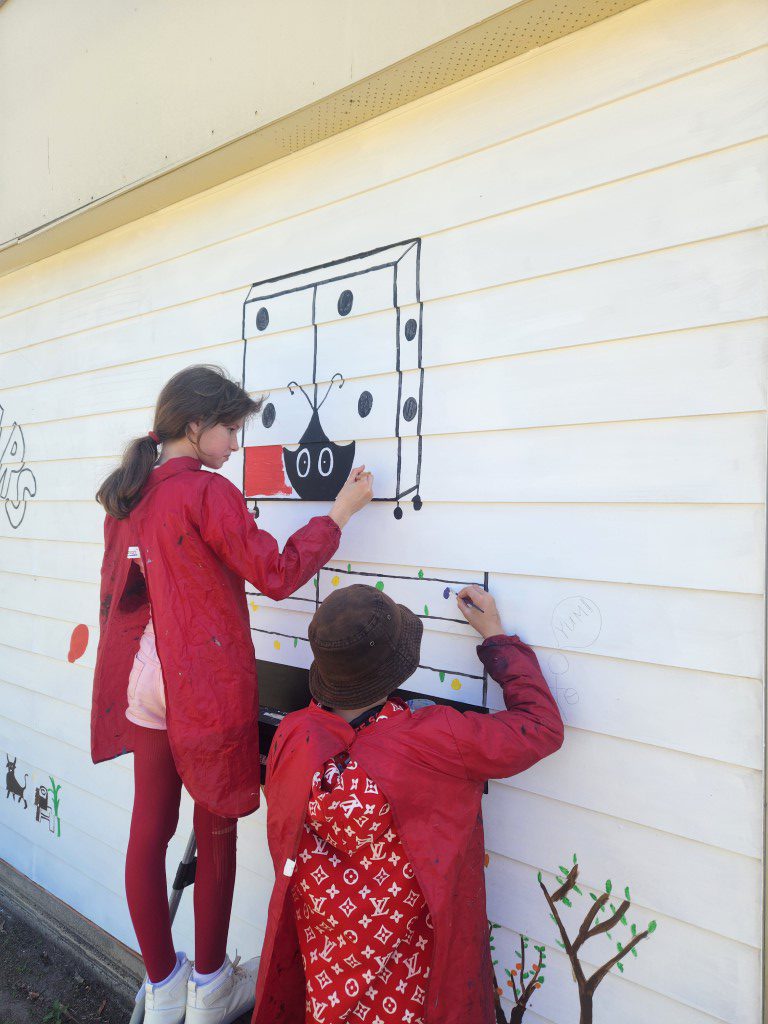
With the Paint Australia Beautiful – Schools Competition officially opening soon, there’s lots to do, so we’ve put together a few notes to help you choose your wall, plan your design and paint your mural. Remember, how your primary school decides to represent the natural environment or sustainability themes in your mural design is completely up to you.
Your mural might show a natural space that your community loves and recognises, or represent the things you think are most important when it comes to protecting the environment. We know students are great at coming up with creative ideas, so work together and put your pen, pencil or paint brush to paper.
We suggest using at least an A3 piece of paper to give yourself plenty of room, and design in full colour. For your application, your primary school should upload a photograph of your proposed wall mural, along with an explanation about your mural design, and why it was chosen. Also upload a photo of the proposed blank wall / fence etc where the mural will be painted.

TIPS FOR PLANNING AND PAINTING YOUR MURAL
- Your mural will hopefully be there for a long time, so think about a design that will stay relevant for your school and the environment in years to come.
- Discuss what colours work best for your mural. Do you have school colours that you would like to use?
- Think about the size of the wall and the size of your mural. For example, a small mural on a large wall may not be the best way to showcase your mural.
- Also, think about the surface of your wall. This will impact the preparation you’ll need to do before painting your mural.

EXPLORING COLOUR
With thousands of colours to choose from, finding the perfect selection for your mural can seem tricky at first. We probably all know that red and white make pink and red and yellow make orange. There are many colours you can make by simply mixing colours together.
Paint selection tip
Keep in mind, choosing more colours generally means you’ll need smaller amounts of that colour, and therefore smaller size cans. It’s always economical to purchase larger cans, so try to use your colour wheel if you need to create multiple shades of the one colour.
WHERE WILL YOU PAINT YOUR MURAL?
It’s important to choose your wall prior to creating your design, for two reasons. Firstly, the wall size will determine the dimensions of your submitted design, and secondly, understanding your wall surface and how paint is applied and absorbed may impact the level of detail and the number of colours used in your designs.
From 2026, you can now choose to paint your mural on external or internal public walls – as long as the criteria is met. This means that schools who have previously been excluded can now consider entering a gymnasium, hall, library, church, hallway, or multi-purpose quadrangle wall. Reach out if you need clarification to admin@kab.org.au
How porous is the wall surface?
The more porous the surface is, the more paint you will need. A porous surface has small holes, or pores, which allow the building material to hold, or absorb, air, water and other liquids.Concrete, brick, rendered walls or a timber fence?
A concrete wall is usually a good smooth surface that is perfect for your mural and will really make your mural pop.
Is there a brick wall at your school? Remember to factor in the gaps between
the bricks in your design.
Has your school got a rendered wall?
A rendered wall is covered with cement and usually a rougher surface.
Does your school have a timber fence? Think about the gaps in the palings when
planning your mural.Steel walls – sheds, colorbond fences and shipping containers
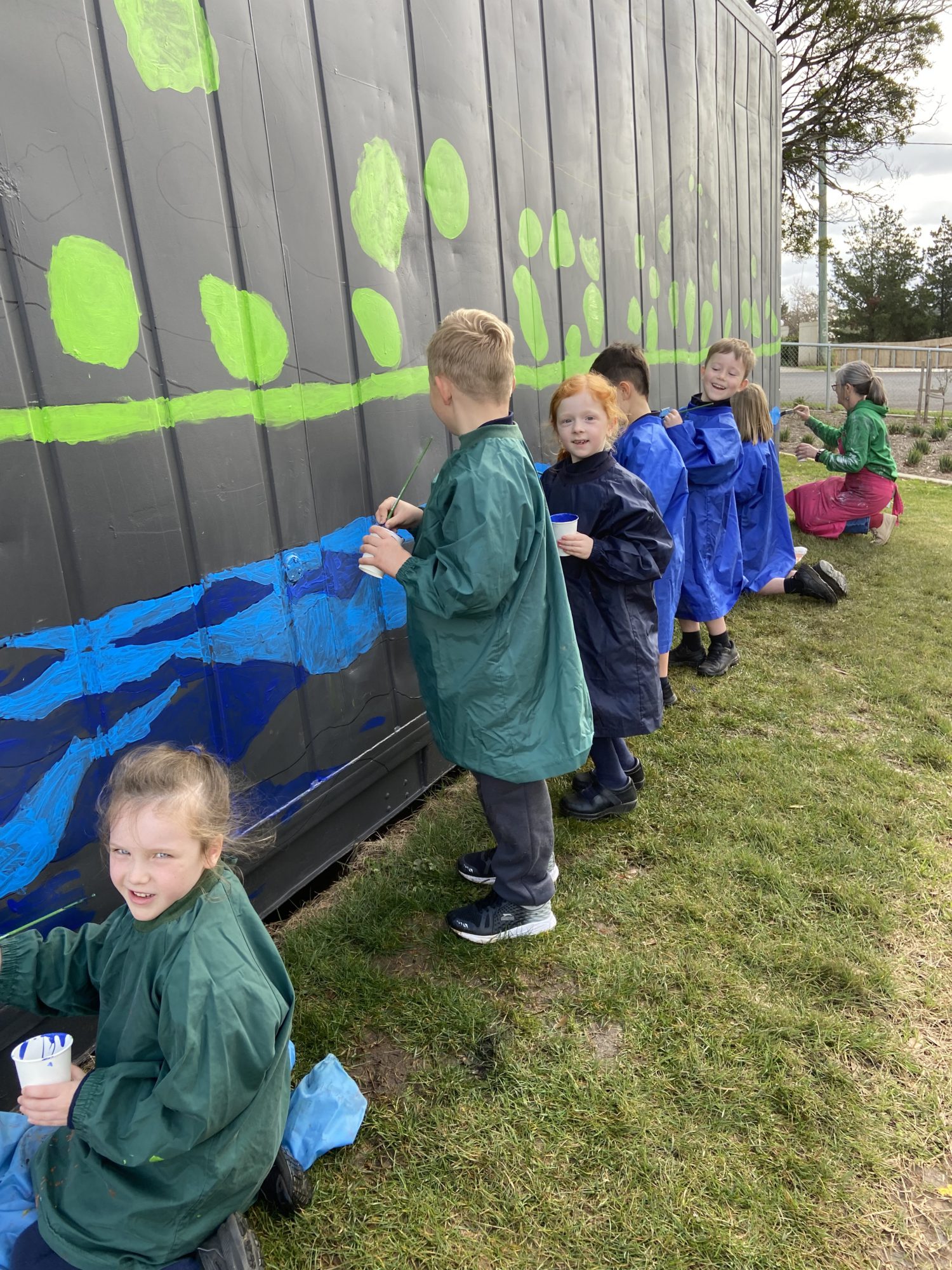
If it’s a shed, colorbond fence or a shipping container that’s chosen for your mural, these steel surfaces need a little more preparation. These types of surfaces will need a primer paint to best prepare the surface before you paint your mural.
The winning schools will be provided with information on how to best prepare the surface they are painting, what will be the best products to use for their mural to ensure it looks fantastic!
USEFUL DOWNLOADS
About the competition
Help with your design
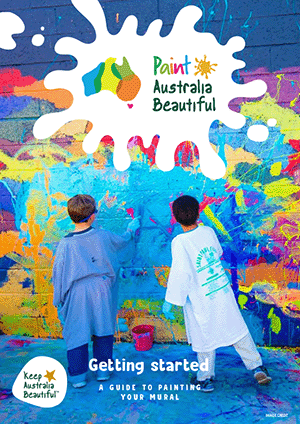
How to get started
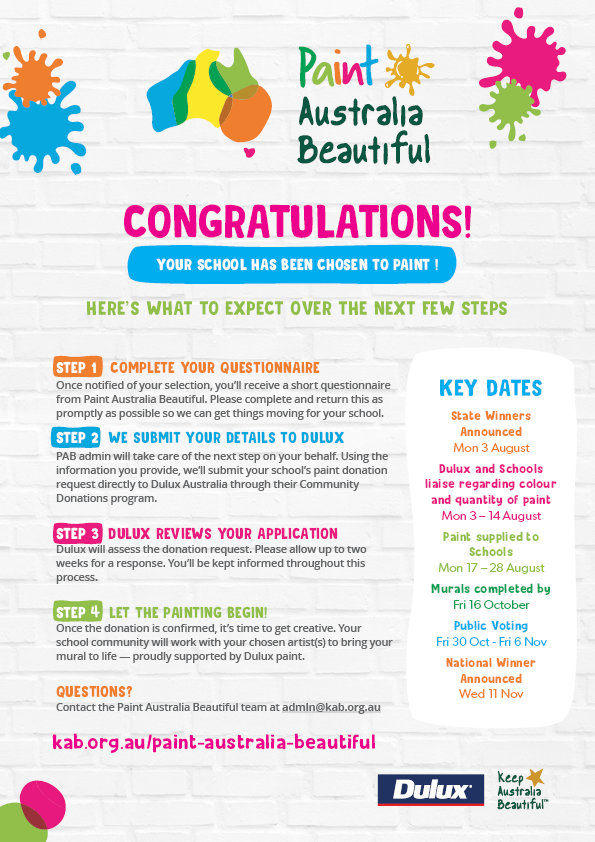
If your School is chosen
Program Supporter

Proudly Sponsored by
Everything you need to know about the Paint Australia Beautiful mural competition
WHAT’S IT ABOUT?
In 2022 KAB launched the inaugural Paint Australia Beautiful – Schools Competition aiming to inspire children to think more deeply about how they can care for the environment. They express their vision for the future through a mural art project. Primary schools around Australia submit a nature-based mural design to go in the running to win all the paint and supplies required to make their mural a reality.
On submission, children explain how their mural reflects the natural environment and their school’s sustainability initiatives. The competition promotes creativity and hopes to educate younger Australians on how we can help conserve our flora and fauna by limiting our environmental impact.
Design submissions are open throughout first term and second and in the third term the murals are shortlisted by a judging panel with fair representation across all States and Territories. The shortlisted schools are then encouraged to share and promote their designs via social media for public voting amongst their school communities and then winners are announced in each state and territory. All winning murals are then completed by third term.
BRAINSTORM YOUR DESIGNS
With the Paint Australia Beautiful – Schools Competition officially opening soon, there’s lots to do, so we’ve put together a few notes to help you choose your wall, plan your design and paint your mural. Remember, how your primary school decides to represent the natural environment or sustainability themes in your mural design is completely up to you.
Your mural might show a natural space that your community loves and recognises, or represent the things you think are most important when it comes to protecting the environment. We know students are great at coming up with creative ideas, so work together and put your pen, pencil or paint brush to paper.
We suggest using at least an A3 piece of paper to give yourself plenty of room, and design in full colour. For your application, your primary school should upload a photograph of your proposed wall mural, along with an explanation about your mural design, and why it was chosen. Also upload a photo of the proposed blank wall / fence etc where the mural will be painted.
TIPS FOR PLANNING AND PAINTING YOUR MURAL
- Your mural will hopefully be there for a long time, so think about a design that will stay relevant for your school and the environment in years to come.
- Discuss what colours work best for your mural. Do you have school colours that you would like to use?
- Think about the size of the wall and the size of your mural. For example, a small mural on a large wall may not be the best way to showcase your mural.
- Also, think about the surface of your wall. This will impact the preparation you’ll need to do before painting your mural.
EXPLORING COLOUR
With thousands of colours to choose from, finding the perfect selection for your mural can seem tricky at first. We probably all know that red and white make pink and red and yellow make orange. There are many colours you can make by simply mixing colours together.
Paint selection tip
Keep in mind, choosing more colours generally means you’ll need smaller amounts of that colour, and therefore smaller size cans. It’s always economical to purchase larger cans, so try to use your colour wheel if you need to create multiple shades of the one colour.
WHERE WILL YOU PAINT YOUR MURAL?
It’s important to choose your wall prior to creating your design, for two reasons. Firstly, the wall size will determine the dimensions of your submitted design, and secondly, understanding your wall surface and how paint is applied and absorbed may impact the level of detail and the number of colours used in your designs.
From 2026, you can now choose to paint your mural on external or internal public walls – as long as the criteria is met. This means that schools who have previously been excluded can now consider entering a gymnasium, hall, library, church, hallway, or multi-purpose quadrangle wall. Reach out if you need clarification to admin@kab.org.au
How porous is the wall surface?
The more porous the surface is, the more paint you will need. A porous surface has small holes, or pores, which allow the building material to hold, or absorb, air, water and other liquids.Concrete, brick, rendered walls or a timber fence?
A concrete wall is usually a good smooth surface that is perfect for your mural and will really make your mural pop.
Is there a brick wall at your school? Remember to factor in the gaps between
the bricks in your design.
Has your school got a rendered wall?
A rendered wall is covered with cement and usually a rougher surface.
Does your school have a timber fence? Think about the gaps in the palings when
planning your mural.Steel walls – sheds, colorbond fences and shipping containers
If it’s a shed, colorbond fence or a shipping container that’s chosen for your mural, these steel surfaces need a little more preparation. These types of surfaces will need a primer paint to best prepare the surface before you paint your mural.
The winning schools will be provided with information on how to best prepare the surface they are painting, what will be the best products to use for their mural to ensure it looks fantastic!